The AI Consulting Renaissance: Why The Traditional Model is Obsolete
For the last half-century, the global consulting industry has operated on a simple, unbreakable formula: Time = Value.
The ritual is a corporate rite of passage. A company, facing a "transformational" challenge—today, it is the existential imperative of Artificial Intelligence—summons a "Big Four" or "MBB" firm. A team of elite consultants, armed with proprietary frameworks, arrives.
What follows is the "six-month-slog."
It begins with a multi-week "discovery phase." It expands into "stakeholder interviews," "data-gathering," and "consensus-building workshops." Finally, after two quarters and a seven-figure invoice, the engagement concludes. A 200-page, spiral-bound report lands on the CEO's desk with a dull, heavy thud.
This is "The Doorstop." It is comprehensive, it is thorough, it is politically "safe," and it is almost completely useless.
This is the "Traditional Model" of consulting. It is a system perfected for the slow, stable, predictable, industrial economy of the 20th century. And in the exponential, volatile, AI-driven economy of the 21st, it is obsolete.
We are in the midst of an AI Consulting Renaissance. A new model has emerged, one that rejects the "battleship" in favor of the "fighter jet." It’s a model that recognizes that in an exponential age, speed is the new currency, and clarity is the only deliverable that matters. This new model, epitomized by Roth AI’s High-Velocity, High-Impact (HVHI) approach, doesn't just "accelerate" the old process; it renders the entire thing obsolete.
Part 1: The Anatomy of an Obsolete Model
To understand why the renaissance is happening, we must first have the courage to dissect the "corpse" of the traditional model. Why, when companies are spending billions on AI transformation, are 70% of those initiatives failing to deliver any significant value?
The answer is that the "consulting" model they are using is not just unhelpful; it is often the cause of the failure.
Flaw 1: The Original Sin (The Incentive Misalignment)
The traditional model's greatest flaw—its "original sin"—is its business model. It is incentivized by time (the billable hour), not by value (the result).
In this model, speed is the enemy of revenue. A 6-month engagement is six months of billing. A 200-page report is the physical "proof" of thousands of hours of "work." The entire system is structurally designed to expand the process, to "boil the ocean," to "leave no stone unturned."
When you hire a firm that bills by the hour, you are paying for a process, not for an outcome. This single misalignment is the root of all the other dysfunctions.
Flaw 2: The "Discovery" Theater (The Overhead of "Learning")
The "six-month-slog" always begins with a multi-week "discovery phase." This is pure "consulting theater."
It involves a team of junior analysts (on your dime) "learning your business." They conduct dozens of interviews, asking your VPs, "What keeps you up at night?" They are, in effect, a very expensive "data-entry" service, collating information your company already has.
This "discovery" is 100% Muda (the "Lean" term for "waste"). You are paying a premium for the overhead of the consultant's education. It is a colossal waste of your most precious internal resource: the focused attention of your leadership team.
Flaw 3: The Tyranny of Consensus (The "Safety" Trap)
The traditional model is not a truth-seeking mechanism; it is a political risk-management tool.
The endless "stakeholder workshops" are not designed to find the best or boldest answer. They are designed to find the safest answer—the one, single, lukewarm "strategy" that every VP, from Legal to Marketing, can "get aligned on."
This "consensus-building" is a process of "watering down." It filters out the bold, high-impact, decisive actions that AI requires. It filters for the "small, polite, incremental" steps that offend no one and, as a result, achieve nothing. The entire model is designed to produce a "defensible" answer, not the right one.
Flaw 4: The "Doorstop" Deliverable (The Paralysis by Analysis)
After six months of "billing" and "consensus-building," the "Big Report" arrives. And it is the final, fatal blow.
It is not a "plan." It is a "menu" of 50 "potential workstreams," 30 "strategic opportunities," and 10 "five-year-horizons."
This is not a "deliverable"; it is an act of malpractice. It is "overproduction" that creates the very "analysis paralysis" it was hired to solve. The leadership team, having waited six months for an answer, is instead handed a textbook and told to "form a committee" to "prioritize the findings."
The "battleship" has spent six months "planning," only to be told it has 50 possible directions to turn. This is the definition of "obsolete."
Part 2: The New Market Imperative (The World Changed)
This "battleship" model was "fine" in a stable world. But the world changed. The rise of AI, in particular, has introduced three new market forces that make this slow-motion "analysis" a form of corporate suicide.
1. The "Half-Life" of AI is Now Months, Not Years The "half-life" of a digital strategy (the time it takes to become 50% obsolete) has collapsed. A new Generative AI model, a new data platform, a new automation tool—these aren't "annual" events; they are quarterly (sometimes weekly).
A 6-month analysis is guaranteed to be obsolete upon delivery. The "perfect" AI roadmap you are presented with in June is based on the technology landscape of January. It is a historical document, not a strategy.
2. The "Startup Threat" is the New Competitor Your biggest threat is no longer the other "battleship" in your industry. It is the 10-person startup, unburdened by legacy or bureaucracy, that just deployed a "good enough" AI tool yesterday.
They are not "in committee." They are not "building consensus." They are in the market. They are "launching and iterating." They are capturing your customers and, most importantly, learning from real-world data while you are still "socializing the findings" of your "Big Report."
3. The "Cost of Inaction" (COI) is Greater than the "Cost of Failure" This is the new math. In a stable world, a "bad bet" was the biggest risk. In an exponential world, the biggest risk is not betting at all.
The "Cost of Inaction"—the 6 months of "waiting" for the "perfect" plan—is a 6-month loss. It’s 6 months of market share you ceded. It's 6 months of efficiency gains you didn't capture. The old model, which is 99% "waiting," is now the single greatest risk a company can take.
Part 3: The Renaissance: Roth AI’s HVHI Model
The "AI Consulting Renaissance" is the solution to this crisis. It is a "Lean" revolution. It is a model built not on "billing for time," but on "delivering clarity now."
The High-Velocity, High-Impact (HVHI) model is the "superior, modern alternative" because it is not "faster consulting"; it is a different machine. It is a "fighter jet" for the "dogfight."
It is built to surgically remove the 99% "waste" (the "discovery," the "consensus," the "overproduction") and deliver only the 1% of "value."
How a 20-Minute Triage Replaces a 6-Month Slog
The 20-minute "triage" seems impossible to the old guard. But that's because the "math" is different. The 20-minute session is not the "work"; it is the deliverable.
Step 1: The "Flipped" Engagement (Eliminating the "Overhead") The HVHI model "flips" the entire engagement. The 90% "discovery" waste is eliminated.
-
The "Strategic X-Ray": The process begins with an asynchronous, high-signal "intake." This is not a "contact form." It is a diagnostic scalpel. It forces the client to state their quantifiable bottlenecks, their "shiny object" distractions, and their stalled projects.
-
The "Pre-Mortem" Analysis: This is the real "deep dive," and it happens before the call. This is where "experience" replaces "process." A junior analyst (the old model) has to "discover" from scratch. An expert (like Miklos Roth) uses pattern recognition. They have seen this "problem archetype" 1,000 times before. They instantly see the "$10M problem" (the root cause) hiding behind the "$1 problem" (the symptom).
Step 2: The 20-Minute Triage (The "Surgical Strike") The 20-minute call is not a "workshop." It is an E.R. triage. The extreme time constraint is a "forcing function" that makes "waffling" and "consulting theater" impossible.
-
Minutes 0-5: The Diagnosis. The call begins with the answer. "We have reviewed your X-Ray. Your stated problem is X. Our analysis shows your real $50M problem is Y. Is this correct?" This bypasses 6 months of "discovery" in 5 minutes.
-
Minutes 5-15: The Triage. This is where "clarity" is delivered. The consultant ruthlessly cuts off the "noise"—the "shiny objects," the "pet projects"—to keep the "signal." This is the antidote to the "consensus trap." It is a decisive, data-backed opinion.
-
Minutes 15-20: The Prescription. The call ends not with a "plan to make a plan," but with a prescription.
The "Lean" Deliverable: The Antidote to "The Doorstop"
The final, and most critical, difference is the deliverable. The HVHI model replaces the 200-page "Doorstop" (the "waste of overproduction") with a one-page "Three-Point Prescription."
This "Lean" deliverable is designed for one thing: immediate action.
-
The "Must-Do" (The 90-Day Sprint): It identifies the one, highest-impact, "Minimum Viable Impact" (MVI) project. This is the antidote to the "50 workstreams." It provides focus.
-
The "Must-Not-Do" (The "Capital-Incinerator" Killer): This is often the most valuable part. It gives the leader the permission to kill the bad "consensus" projects and "shiny objects" that are draining the budget.
-
The "First Domino" (The 48-Hour Action): It concludes with a simple, physical, non-negotiable "first step." This is the "trigger" that breaks "analysis paralysis" today.
Conclusion: The New Equation of Value
The "AI Consulting Renaissance" is a paradigm shift. It is a rejection of the old, flawed math.
The Obsolete Equation: Time + Consensus + Comprehensiveness = Value This equation is broken. It produces "defensible," "comprehensive" failure.
The Renaissance Equation: Clarity + Focus + Velocity = Value This is the new math. This is the only math that works in an exponential market.
The traditional model is obsolete because it is structurally incapable of providing any of these three new inputs. It is designed to be slow, designed to be "noisy" (comprehensive), and designed to be "un-focused" (consensus-driven).
The HVHI model is the "superior, modern alternative" because it is engineered to deliver only these three inputs. It is a "Lean" machine that strips away the 99% "consulting theater" to deliver the 1% "clarity" that actually moves the needle.
For the leader under intense pressure to modernize, the choice is, for the first time, clear. You can buy 6 more months of "analysis paralysis," or you can get your "breakthrough" in 20 minutes.
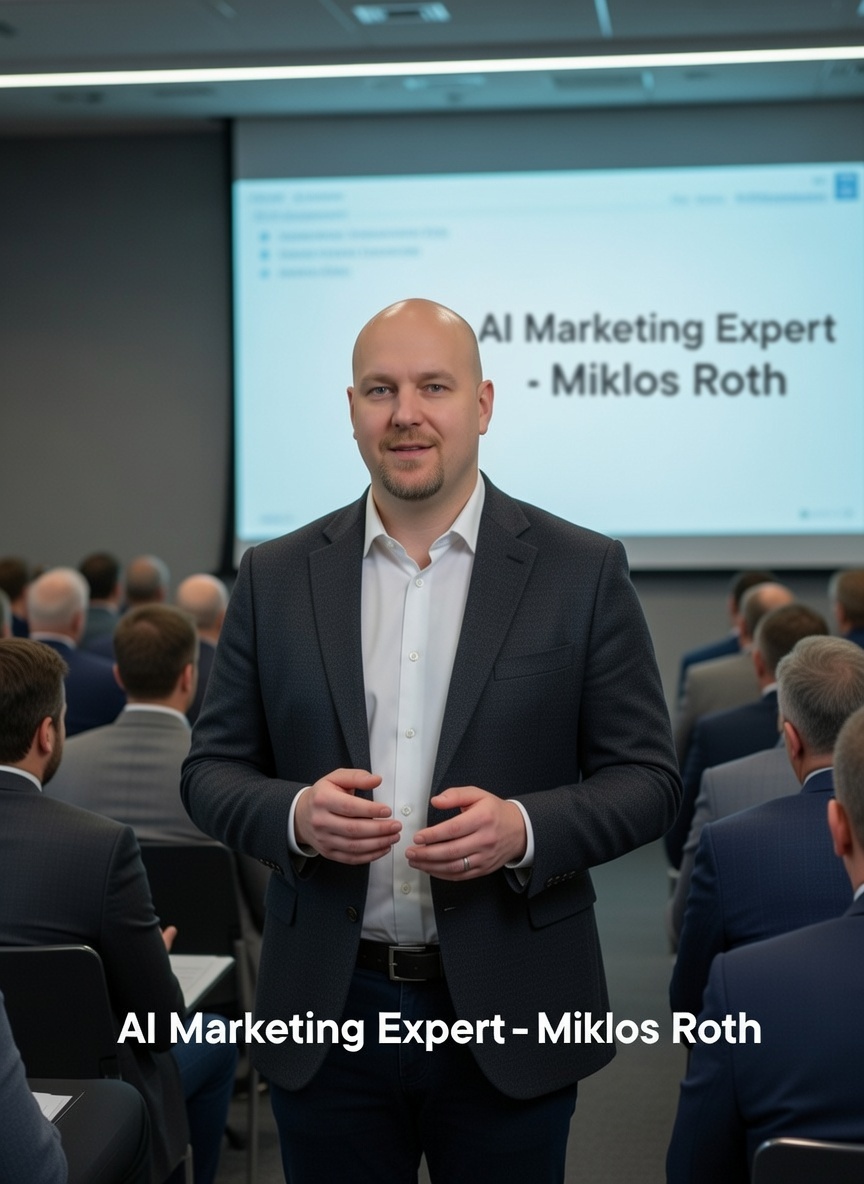 A marketing világában eltöltött két évtizedem alatt megtanultam, hogy a technológiai váltások nem kopogtatnak, hanem ránk törik az ajtót. 2026-ban már nem kérdés, hogy az MI része-e a stratégiának; a kérdés az, hogy milyen mélyen integrálódott a napi munkafolyamatokba. Egy profi audit ma már nem csupán a hirdetési fiókok átnézéséről szól, hanem arról a komplexitásról, ahol az adatelemzés találkozik az emberi kreativitással. A seo (keresőoptimalizálás) területén például a Google algoritmusai már annyira kifinomultak, hogy a puszta technikai beállítások helyett a felhasználói élményt és a kontextuális relevanciát helyezik előtérbe.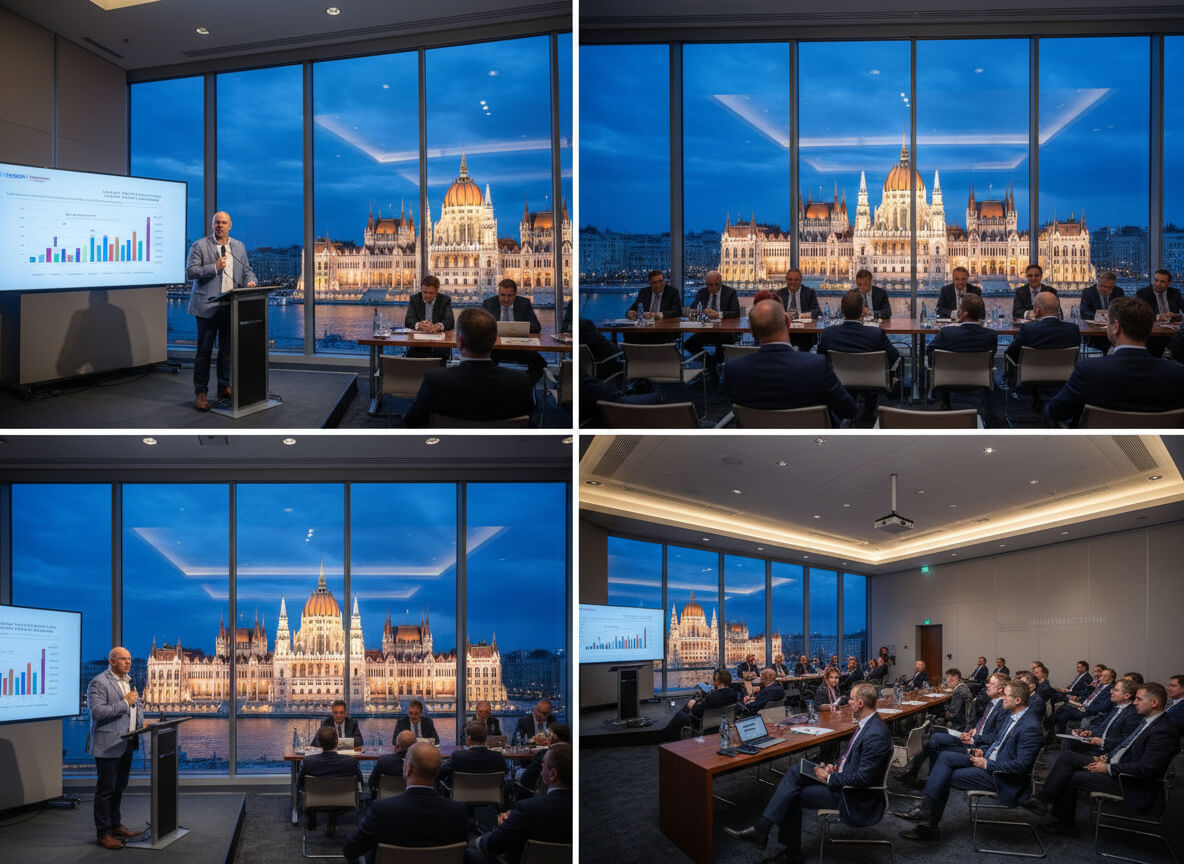
 Az energiaárak drámai, kiszámíthatatlan ingadozása és az egyre sürgetőbb klímaváltozás korában az otthonunk fűtési rendszerének a kérdése soha nem volt még ennyire központi téma. Egy budapesti lakás vagy ház tulajdonosaként pedig nap mint nap szembesülünk a valósággal: a régi, elavult gázkonvektorok, a 20 éves, alacsony hatásfokú kazánok és a szigeteletlen falak szó szerint az utcát fűtik – a mi pénzünkön.